
The CBSE Class 12 results have become a national anxiety event again. Not because students are shocked that exams are hard, but because many students and parents feel they cannot understand, verify, or trust the way marks have been awarded.
That is the deeper problem.
When a student gets a score far below expectation, the system should give them a clear, affordable, time-bound way to verify what happened. Instead, the current CBSE revaluation moment has exposed a bigger weakness in India's education machinery: the burden of proving an evaluation problem still falls on the student.
This is not a small administrative issue. For a Class 12 student, one mark can affect confidence, college applications, scholarships, family pressure, and the way they see themselves after years of preparation.
What actually happened
CBSE declared the Class 12 results for 2026 in May. Soon after, complaints and public frustration grew around unexpectedly low scores, revaluation fees, and the opacity of the checking process.
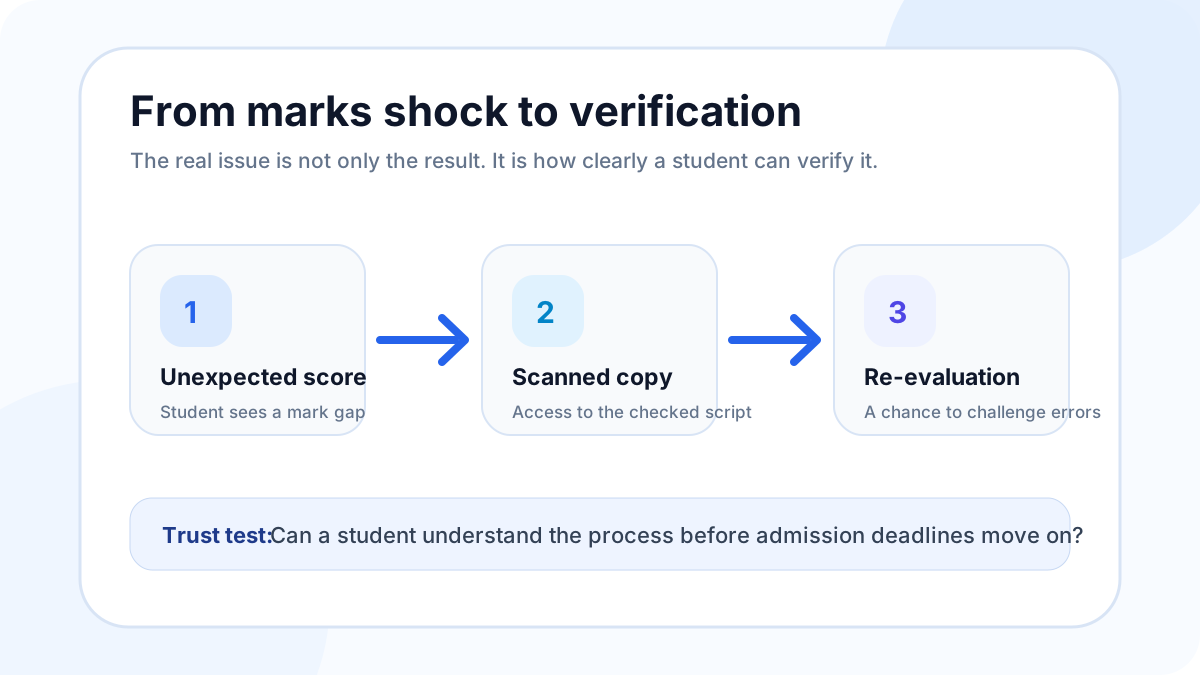
The board's process is built around post-result facilities: students can apply for scanned copies of evaluated answer books, and then apply for re-evaluation. CBSE also says Class 12 answer scripts are evaluated through OSM, or On-Screen Marking, where answer books are digitized and evaluated on screen.
On paper, this sounds modern. Digitization should reduce manual handling problems, improve tracking, and make the process more structured.
But students are not only asking whether the answer sheet was scanned. They are asking:
- Was every answer evaluated properly?
- Was the marking scheme applied consistently?
- Why do some marks feel wildly different from expectation?
- Why does transparency require another paid process?
- Why does the system become clearer only after public outrage?
That is where the trust gap begins.
The revaluation fee backlash says a lot
One of the biggest flashpoints was the cost of challenging results.
Reports around the 2026 Class 12 post-result process said students initially had to pay for scanned answer book access and then apply for re-evaluation. After backlash, the re-evaluation cost was reportedly reduced to Rs 100 per answer book, with the education ministry and CBSE defending the OSM process as transparent.
The fee reduction matters, but it also raises a hard question:
If the system can reduce the cost after outrage, why was the first design so expensive for students in the first place?
For many families, even a few hundred rupees per subject is not casual money. More importantly, students are paying because they suspect the system may have made a mistake. That flips accountability upside down.
In a fair exam system, transparency should not feel like a premium add-on.
OSM is a tool, not accountability
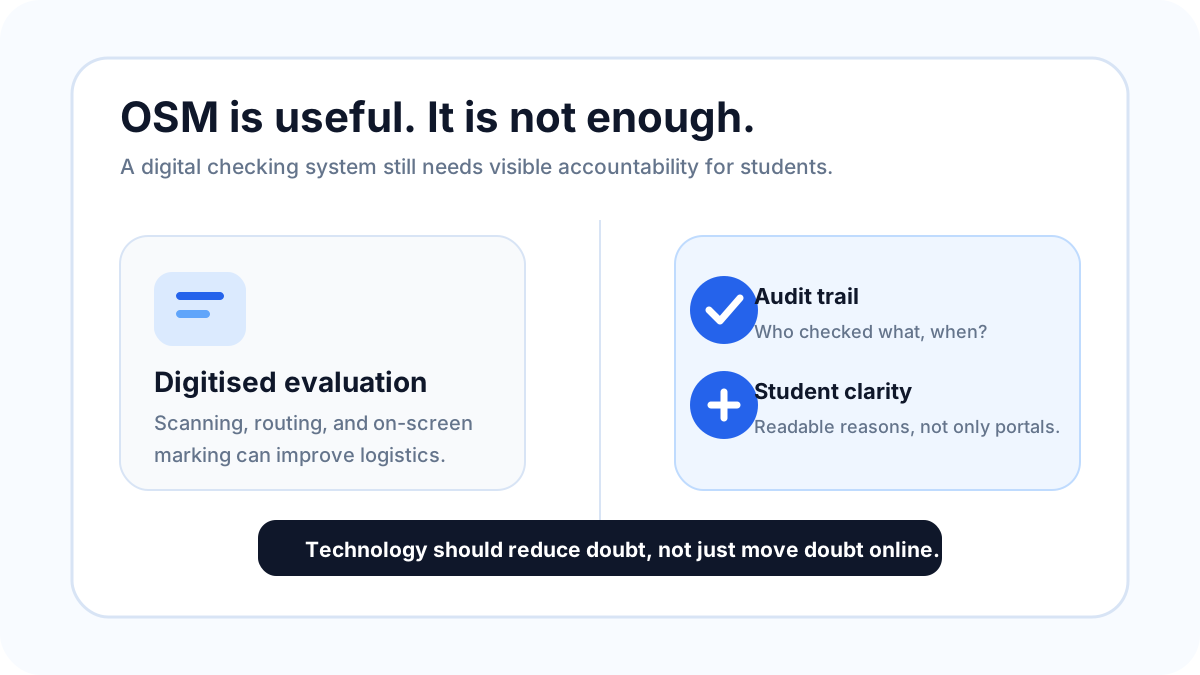
CBSE's On-Screen Marking system is often presented as a transparency upgrade. It may genuinely reduce some older problems: physical answer-book movement, manual logistics, and evaluator allocation issues.
But technology does not automatically create trust.
An online marking system can still fail students if:
- evaluators are overloaded
- marking rubrics are applied unevenly
- grievance windows are too short
- students do not get easy access to annotated answer scripts
- corrections happen silently without public accountability
- communication is written like a circular, not like student support
This is the classic Indian education problem: digitize the form, but keep the power imbalance.
Students do not need another portal. They need a process that treats them as affected people, not ticket numbers.
The current CBSE issue is bigger than CBSE
The anger around Class 12 results is not only about one board. It reflects a larger failure in how Indian education bodies handle high-stakes assessment.
We have built an ecosystem where:
- marks are treated as life-changing
- evaluation remains difficult to audit
- students must fight for answer-book visibility
- official communication is slow and technical
- mental pressure is treated as an unfortunate side effect
- reforms usually arrive after outrage, not before harm
This is why the controversy feels so intense. Students are not only reacting to marks. They are reacting to helplessness.
If a student believes their paper was wrongly evaluated, they should not have to become a legal researcher, fee calculator, portal troubleshooter, and emotional crisis manager at the same time.
Why this hurts college admissions too
Class 12 marks are not isolated from the rest of a student's journey.
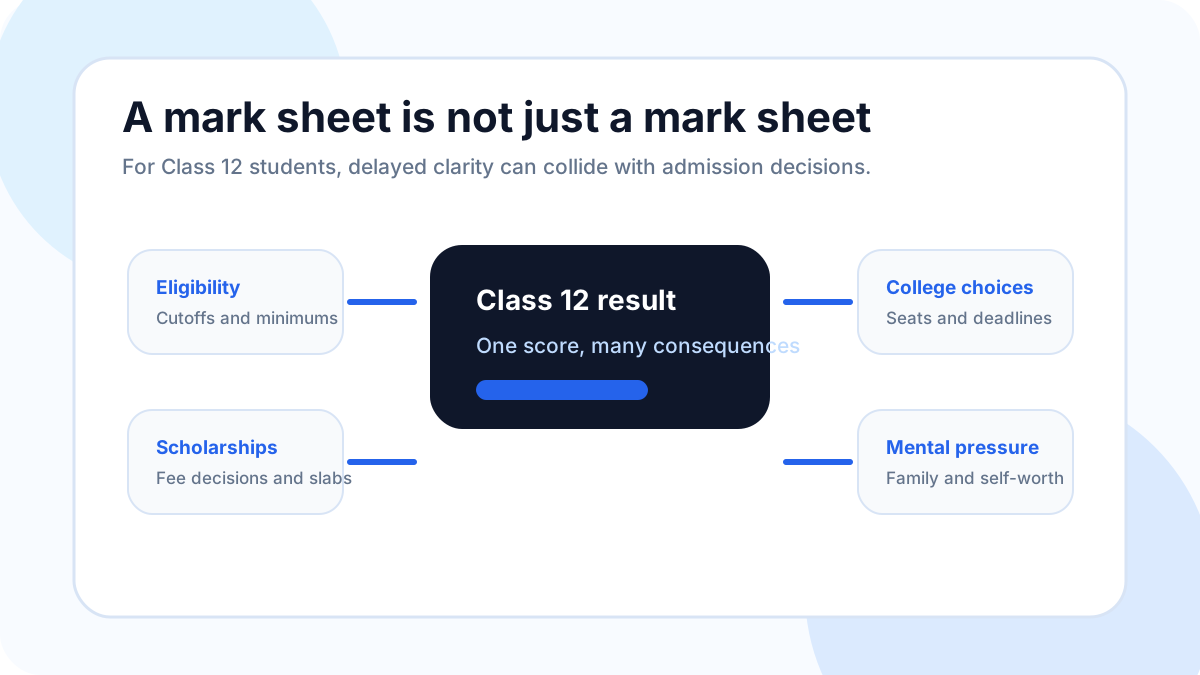
Even in a world of CUET, JEE, private entrance exams, and skill-based admissions, board marks still matter for:
- eligibility cutoffs
- scholarships
- parental decision-making
- admission confidence
- backup college options
- self-worth after school
If revaluation takes time, a student's college decisions may already be moving. Private college seats may be filling. Scholarship conversations may be happening. Families may be pressuring students to finalize options before the board process finishes.
That timing mismatch makes the system feel even more unfair.
Students are asked to make fast decisions while the institutions holding their marks move slowly.
What CBSE should fix
The answer is not only "reduce fees." That helps, but it is not enough.
CBSE and other education bodies need a stronger student-facing accountability model.
1. Give annotated answer scripts by default
Students should be able to see how marks were awarded, not just the final score. If the paper was digitally evaluated, the system should show the relevant marking, totaling, and evaluator annotations in a clear format.
2. Make revaluation affordable from day one
Transparency should not depend on whether enough students complain. If a student is challenging a high-stakes result, the fee should be minimal, predictable, and clearly explained.
3. Publish correction data after revaluation
CBSE does not need to expose student identities. But it can publish aggregate data:
- how many students applied
- how many marks changed
- average change range
- subjects with highest correction volume
- common error categories
That would build trust. Silence builds suspicion.
4. Create a student-friendly revaluation tracker
Every application should show status clearly: submitted, answer book released, re-evaluation requested, evaluator assigned, decision completed, marks changed or unchanged.
Students should not have to decode circulars to know where their case stands.
5. Add an independent audit layer
If a board evaluates lakhs of students, random third-party audits should be normal. Not because every evaluator is careless, but because high-stakes systems need independent checks.
6. Respect the admissions calendar
Revaluation timelines should be designed around college admissions pressure. If board marks influence admissions, the grievance process must move fast enough to matter before admission decisions close.
The hard truth
India's education bodies often talk about reform in big words: digitization, transparency, standardization, modernization.
But students experience reform through smaller questions:
- Can I see my evaluated paper?
- Can I afford to challenge a mistake?
- Will anyone explain what happened?
- Will the answer come before my admission deadline?
- If the system is wrong, will it admit that clearly?
Right now, too many students feel the answer is no.
That is why the CBSE Class 12 revaluation controversy matters. It is not only a marks dispute. It is a trust crisis.
And if India's education system wants students to respect results, it must first build a process that respects students.
Sources checked
- CBSE Examination Circulars for Class XII result statistics, post-result declaration activities, and OSM circulars.
- CBSE OSM Class XII circular, 2026 for the board's on-screen marking process.
- Indian Express report on CBSE Class 12 re-evaluation fee reduction and OSM for the reported fee reduction and ministry position.
- Times of India report on CBSE revaluation fee and revised schedule for the reported backlash, fee change, and revised dates.